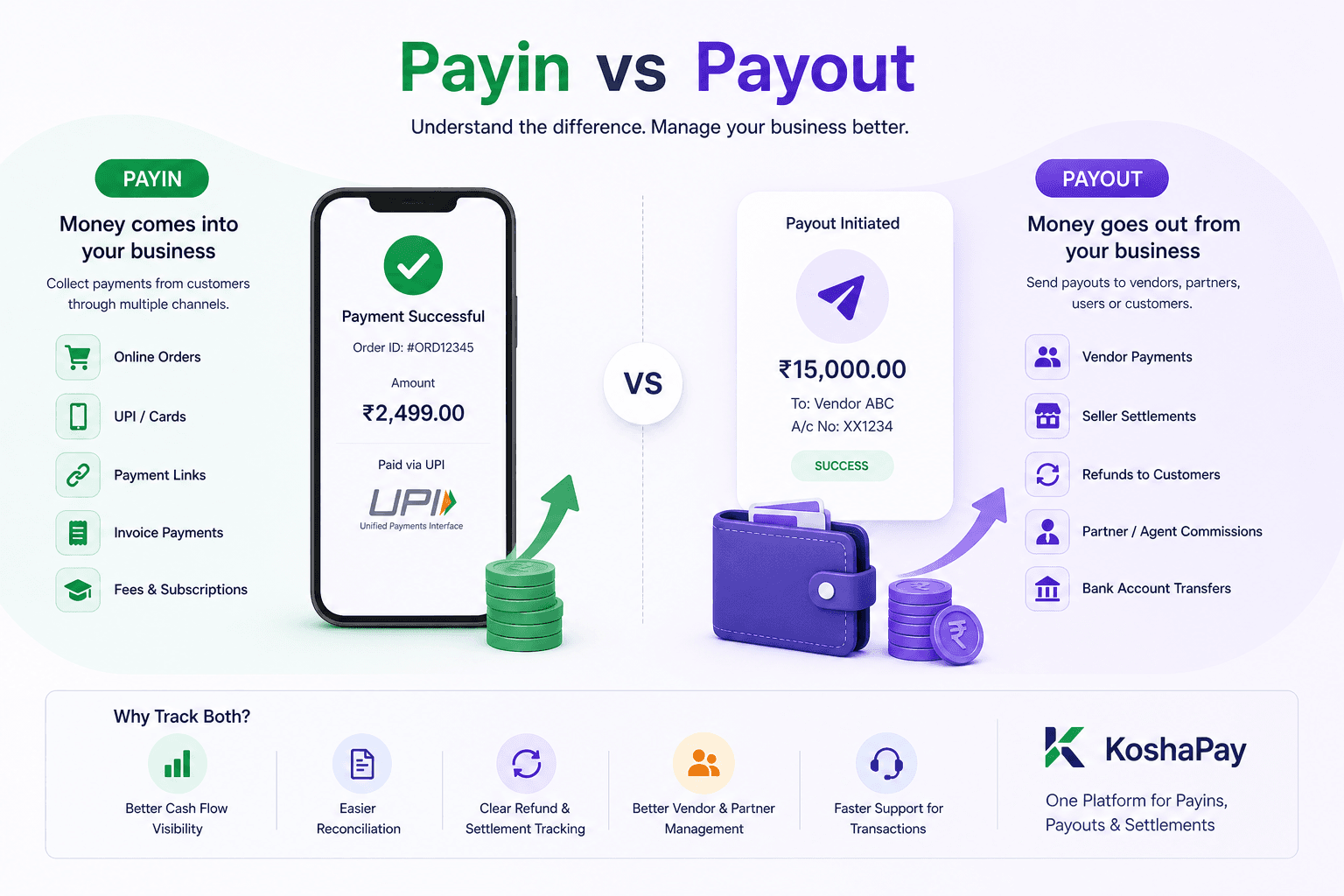
Payin and payout are two important parts of business payment operations. A payin means money coming into your business, while a payout means money going out from your business.
For merchants, understanding both flows is important because collections, refunds, settlements, vendor payments, and partner payouts all affect cash flow and reconciliation.
What Is a Payin?
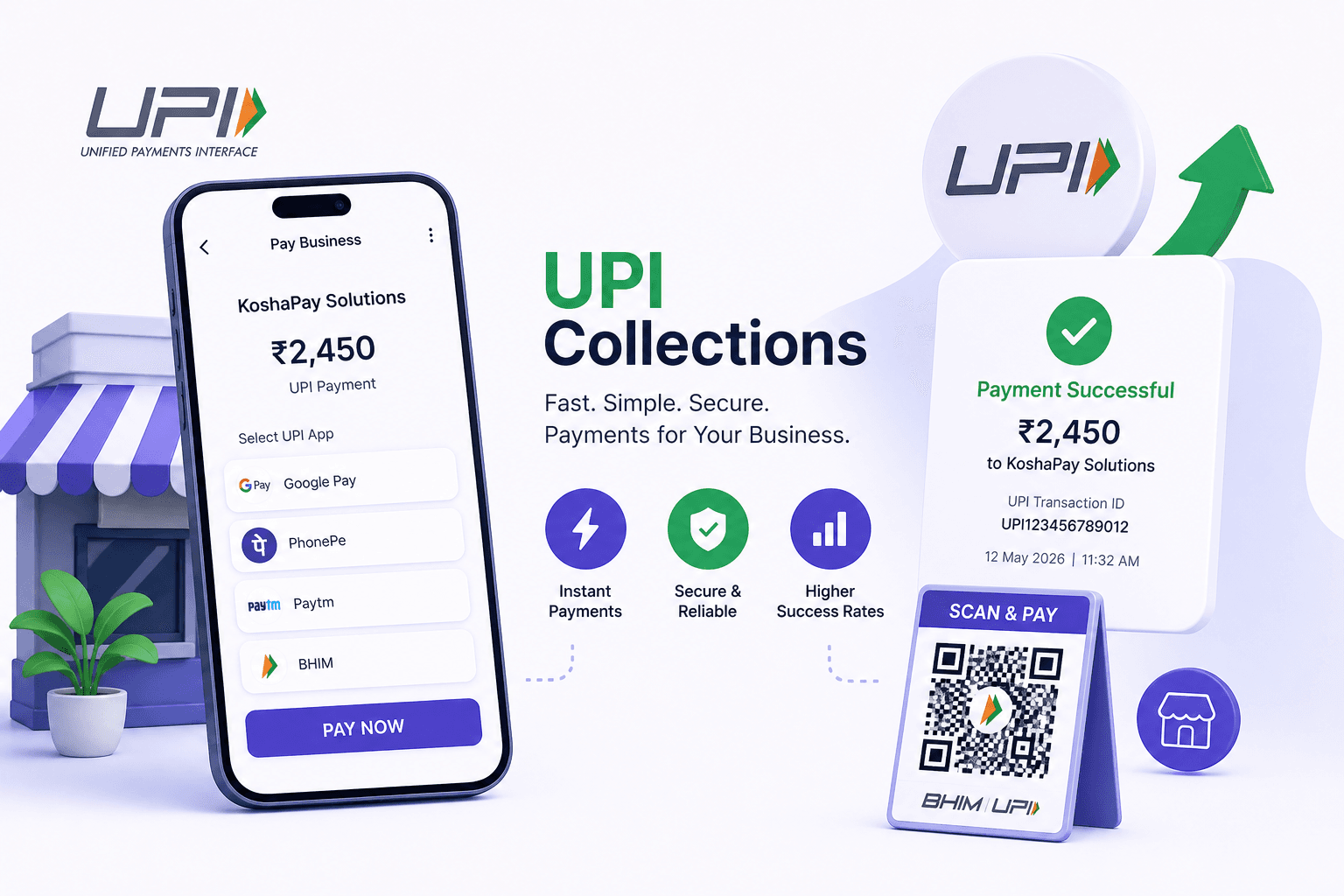
A payin is the process of collecting money from customers. This can happen through a website checkout, mobile app, UPI payment, card payment, QR code, payment link, or invoice payment.
Common payin examples include:
- Customer paying for an online order
- Student paying course or exam fees
- Customer paying insurance premium
- Traveller paying for hotel or flight booking
- Client paying through a payment link
What Is a Payout?
A payout is the process of sending money from your business to another person or business. This may include vendors, sellers, partners, agents, customers, or service providers.
Common payout examples include:
- Sending money to vendors or suppliers
- Paying sellers on a marketplace
- Processing customer refunds
- Sending commissions to agents or partners
- Settling funds to business or merchant accounts
Payin vs Payout: Key Difference
- Payin: Money comes into your business from customers.
- Payout: Money goes out from your business to vendors, customers, partners, or users.
Both are connected. For example, an e-commerce business collects money from customers as payins and later sends payouts to sellers, vendors, logistics partners, or customers for refunds.
Why Merchants Should Track Both
If payins and payouts are tracked separately or manually, finance teams may struggle with reconciliation. Clear tracking helps your business understand how much money was collected, how much was paid out, what was refunded, and what is settled.
- Better cash flow visibility
- Easier reconciliation
- Clear refund and settlement tracking
- Better vendor and partner payout management
- Faster support for transaction-related queries
How KoshaPay Helps
KoshaPay helps merchants manage both payins and payouts from one platform. Your team can collect customer payments, send payouts, track transaction status, review refunds, monitor settlements, and maintain cleaner payment records.
- Payin support: Accept customer payments securely
- Payout support: Send funds to vendors, sellers, partners, or users
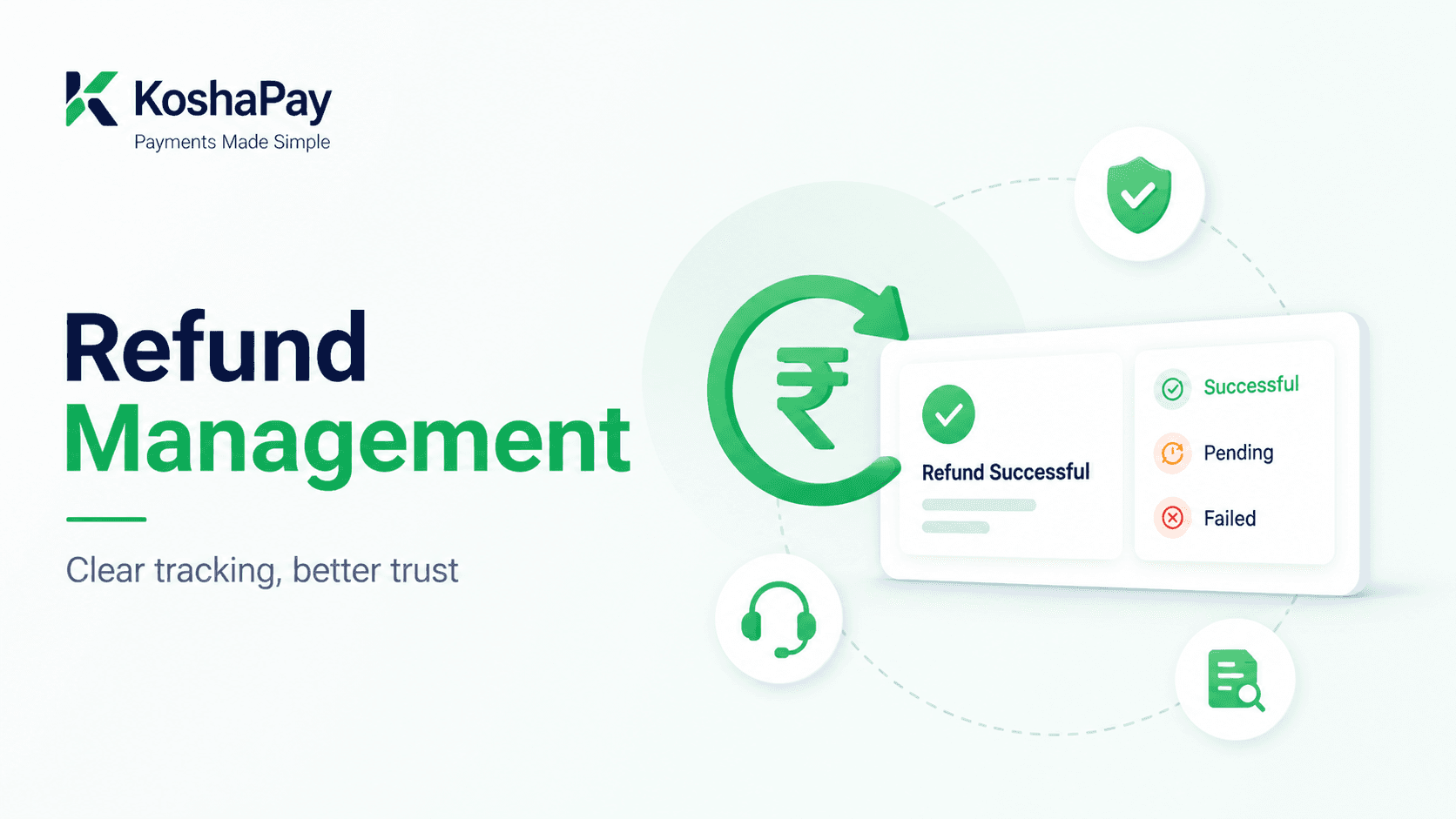
- Status tracking: Monitor successful, failed, pending, and refunded transactions
- Reports: Review collections, payouts, refunds, and settlements
Final Thoughts
Payins and payouts are two sides of the same payment operation. Businesses that manage both clearly can reduce manual work, improve finance visibility, and provide better support to customers and partners.