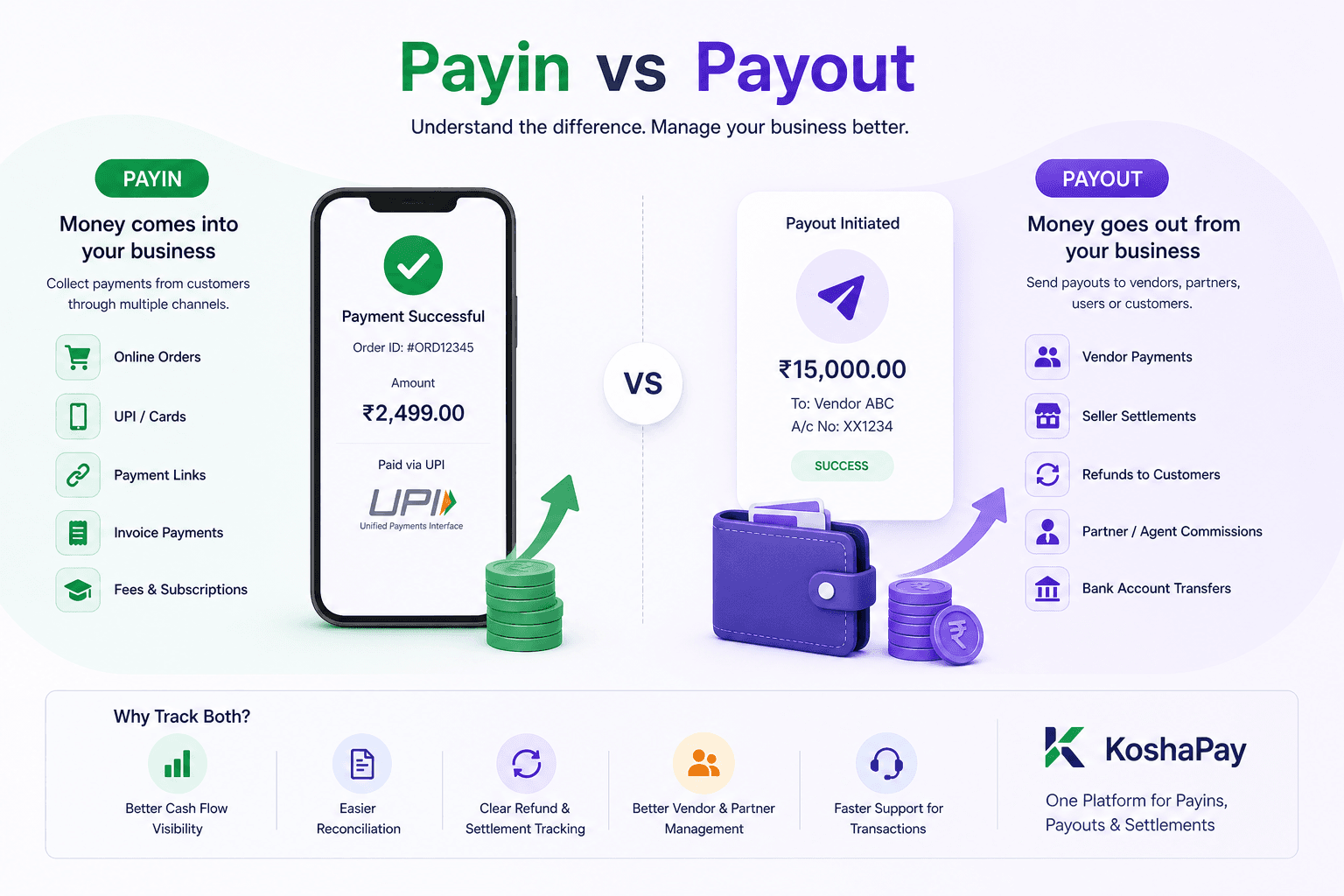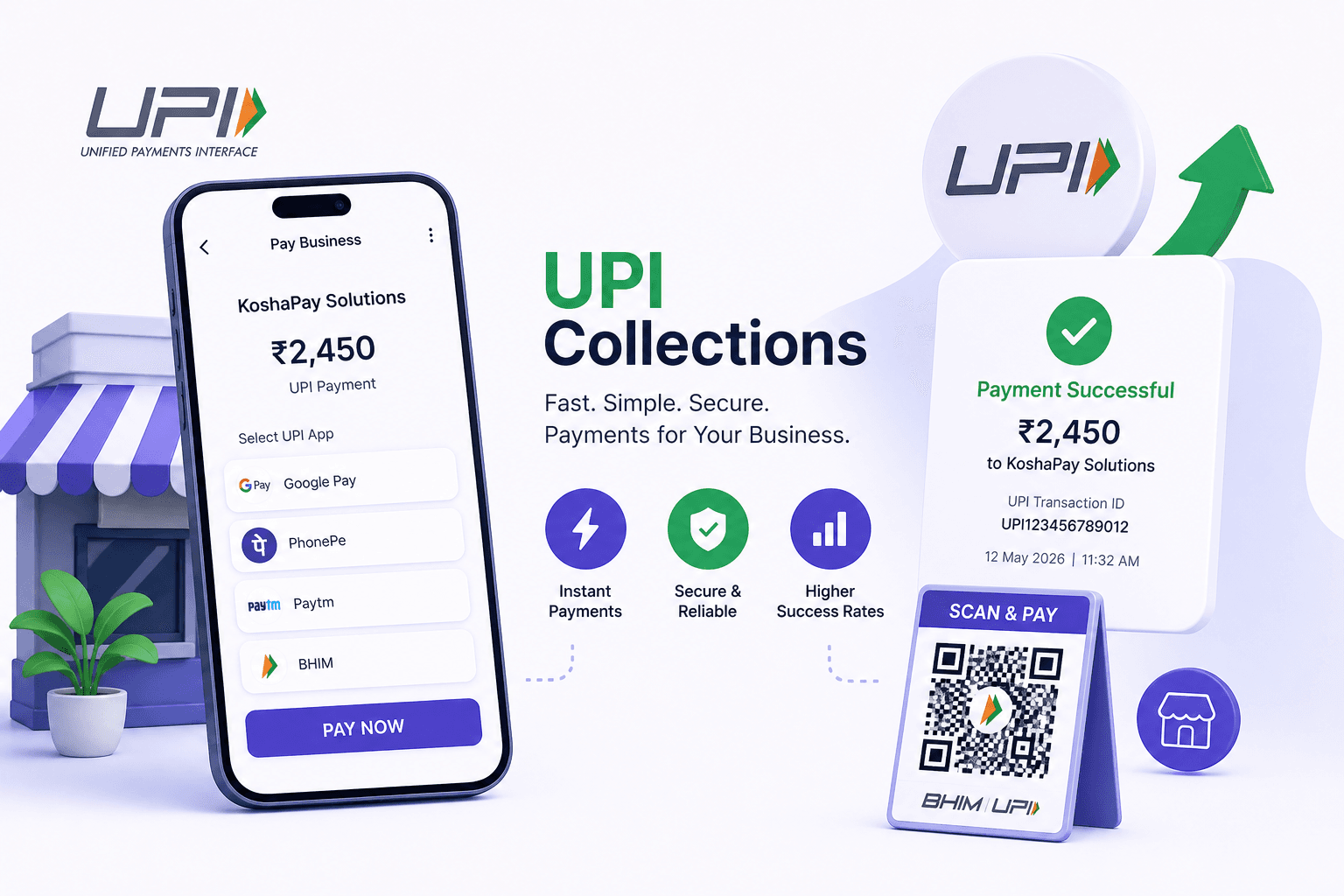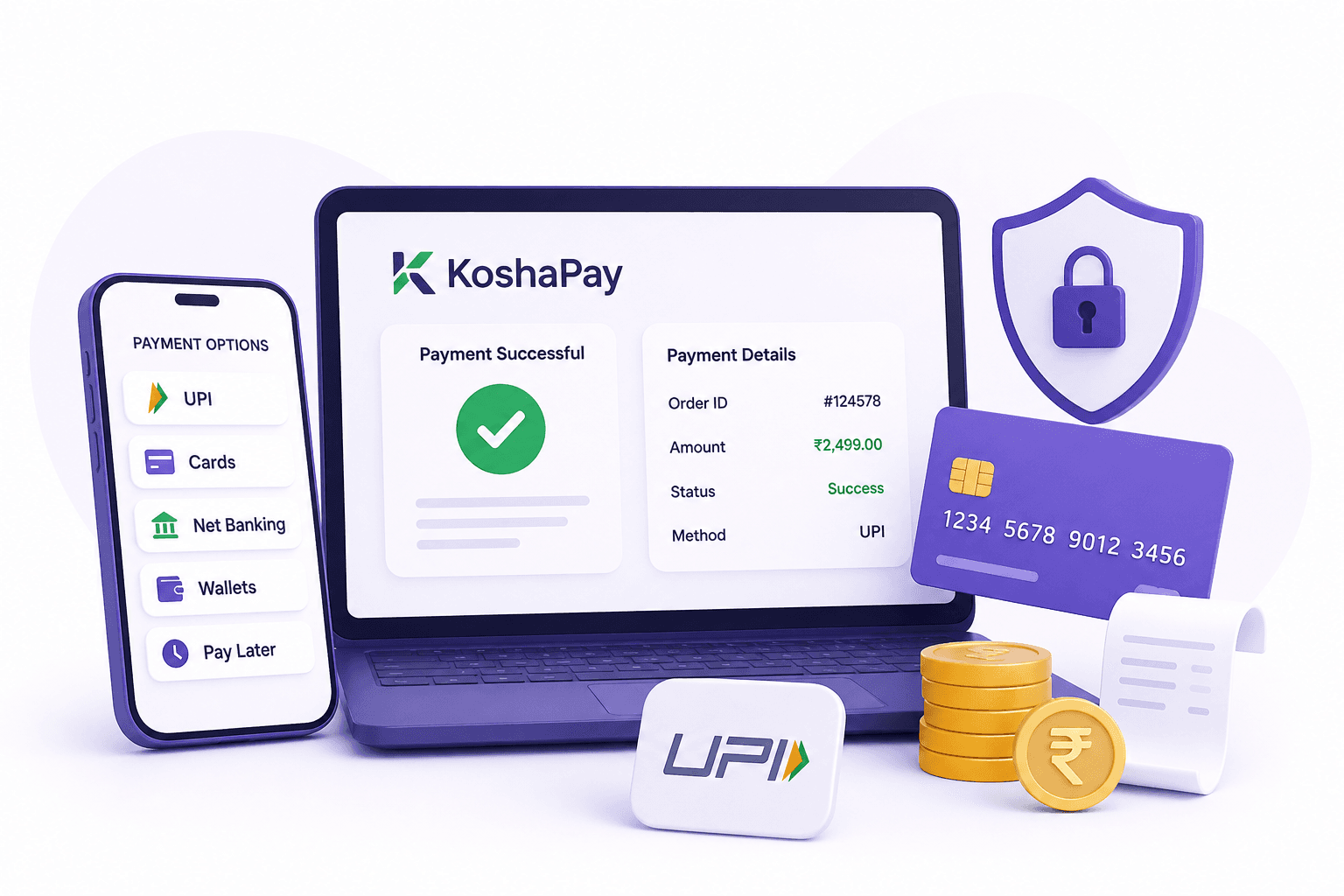
A payment gateway helps businesses accept online payments from customers through websites, mobile apps, checkout pages, or payment links. It securely connects your business with banks and payment networks so payments can be processed and confirmed.
For growing businesses, a payment gateway is not just a checkout tool. It helps teams collect payments, track transaction status, manage refunds, monitor settlements, and reduce manual payment follow-ups.
Why Businesses Need a Payment Gateway
- Faster collections: Accept payments through UPI, cards, net banking, wallets, and payment links.
- Clear transaction status: Track whether a payment is successful, failed, pending, refunded, or settled.
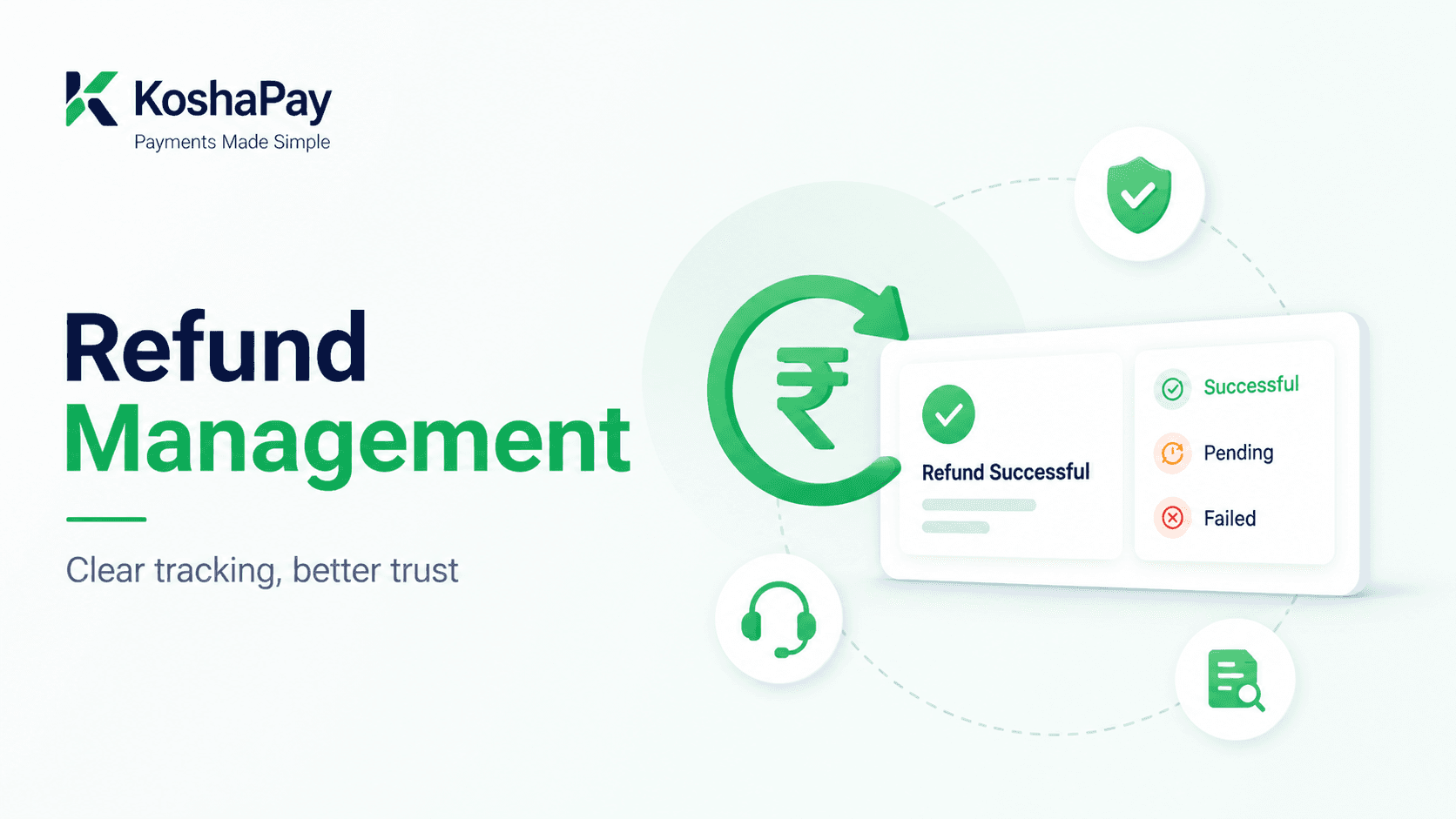
- Better refund handling: Link refunds with original transactions and reduce customer support confusion.
- Settlement visibility: Help finance teams understand when collected money reaches the business account.
- Payout support: Send money to vendors, sellers, partners, agents, or users from one payment system.
Common Use Cases
- E-Commerce: Checkout payments, refunds, and seller payouts
- Travel: Booking payments, cancellation refunds, and vendor payouts
- EdTech: Course fees, exam fees, subscriptions, and student payments
- Insurance: Premium collections, renewals, claim payouts, and agent commissions
How KoshaPay Helps
KoshaPay helps merchants manage payins, payouts, transaction tracking, refunds, webhooks, settlements, and reports from one place. It is built for businesses that need reliable payment operations with better visibility and control.
- Payins: Accept customer payments securely
- Payouts: Send funds to vendors, sellers, partners, or users
- Webhooks: Get real-time payment status updates
- Reports: Track settlements, refunds, and transaction history
Final Thoughts
A payment gateway helps your business move from manual payment handling to a structured payment system. With KoshaPay, businesses can collect payments, manage payouts, track refunds, and monitor settlements with confidence.