Settlement cycle means the time it takes for collected payment money to reach the merchant’s settlement account. When a customer pays online, the amount is first processed through the payment system and then settled to the business based on the agreed settlement timeline.
For growing businesses, settlement timing is important because it directly affects cash flow, vendor payments, inventory planning, refunds, and daily finance operations.
What Does T+0, T+1, and T+2 Mean?
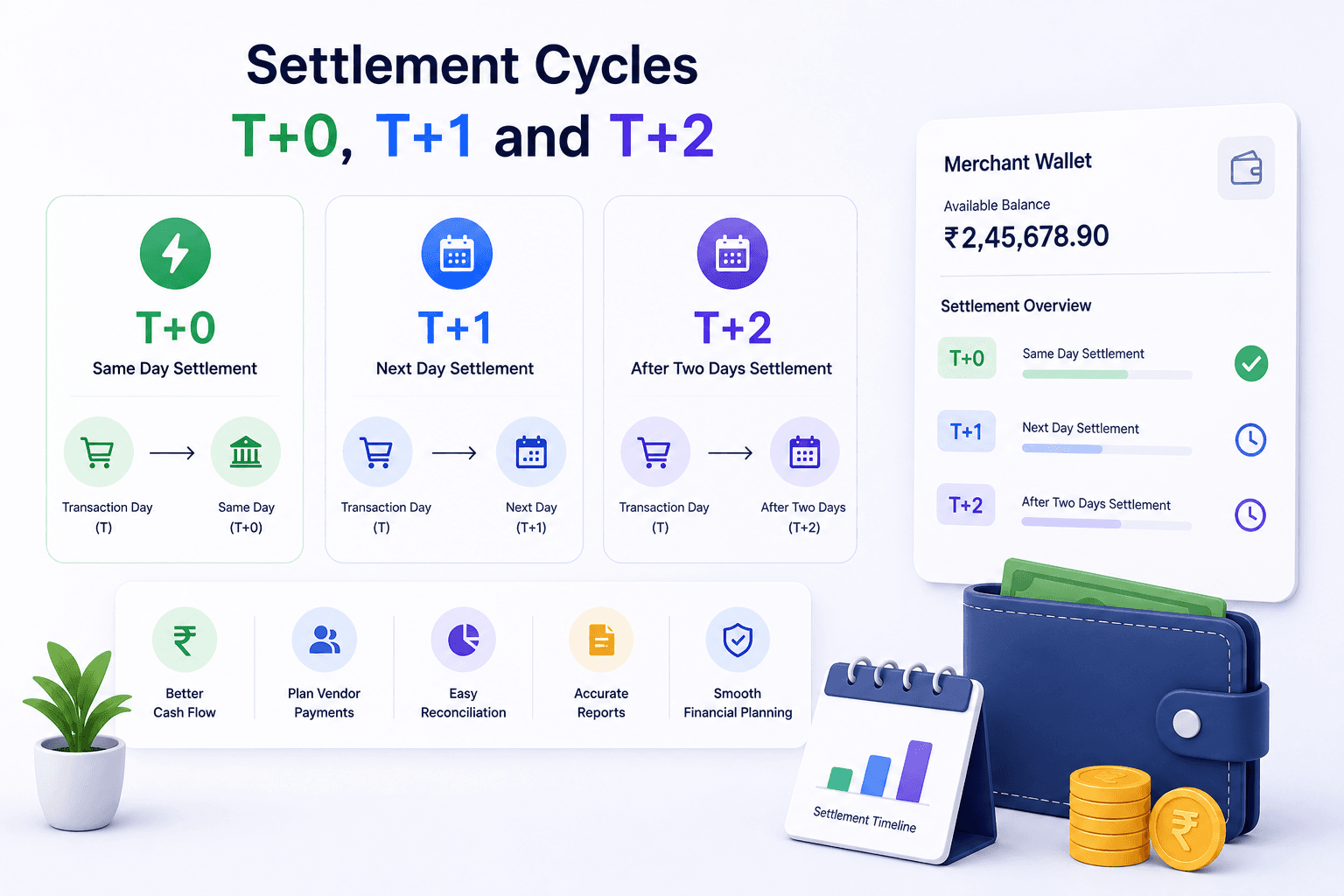
- T+0 settlement: Money is settled on the same day.
- T+1 settlement: Money is settled on the next working day.
- T+2 settlement: Money is settled after two working days.
Here, “T” usually means the transaction day. For example, if a payment is collected on Monday, T+1 means the settlement may happen on Tuesday, and T+2 means it may happen on Wednesday, depending on banking and operational rules.
Why Settlement Cycles Matter
- Cash flow planning: Faster settlements help businesses access funds earlier.
- Vendor payments: Businesses can plan payouts to vendors, sellers, or partners better.
- Refund management: Finance teams can understand available balance before processing refunds.
- Reconciliation: Clear settlement reports help match collected payments with bank credits.
- Business forecasting: Predictable settlement timelines improve financial planning.
Example Settlement Flow
- Customer completes a payment on your website, app, or payment link.
- The payment gateway processes and confirms the transaction status.
- The transaction becomes eligible for settlement based on your cycle.
- The settlement amount is transferred to your merchant account.
- Your finance team reconciles the settlement with transaction reports.
How KoshaPay Helps
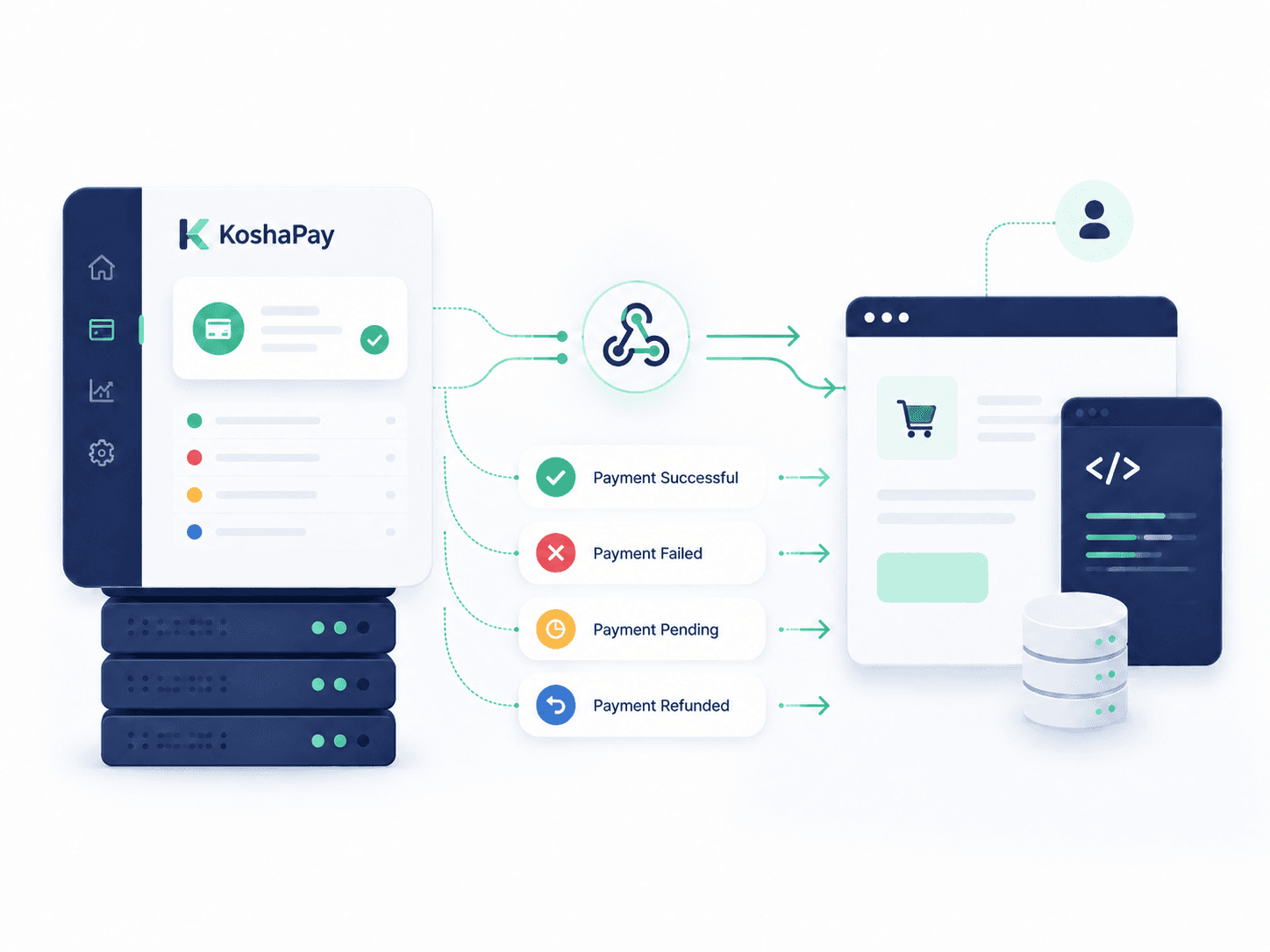
KoshaPay helps businesses track collected payments, payouts, refunds, and settlements from one place. Clear settlement visibility makes it easier for finance teams to understand money movement and reduce manual reconciliation work.
- Settlement tracking: View settlement status and movement clearly.
- Transaction reports: Match payments with settlement records.
- Payout visibility: Track outgoing money movement to vendors or partners.
- Refund records: Keep refunds linked with original transactions.
Final Thoughts
Settlement cycles are a key part of payment operations. Whether your business works on T+0, T+1, or T+2, clear settlement visibility helps your team manage cash flow, reconciliation, refunds, and payouts with more confidence.