Webhook callbacks are one of the most important parts of a payment system. They help your business receive automatic updates when a transaction status changes.
Without webhooks, your team may need to manually check whether a payment is successful, failed, pending, refunded, or settled. With webhooks, your system can receive these updates in real time and act automatically.
What Is a Webhook Callback?
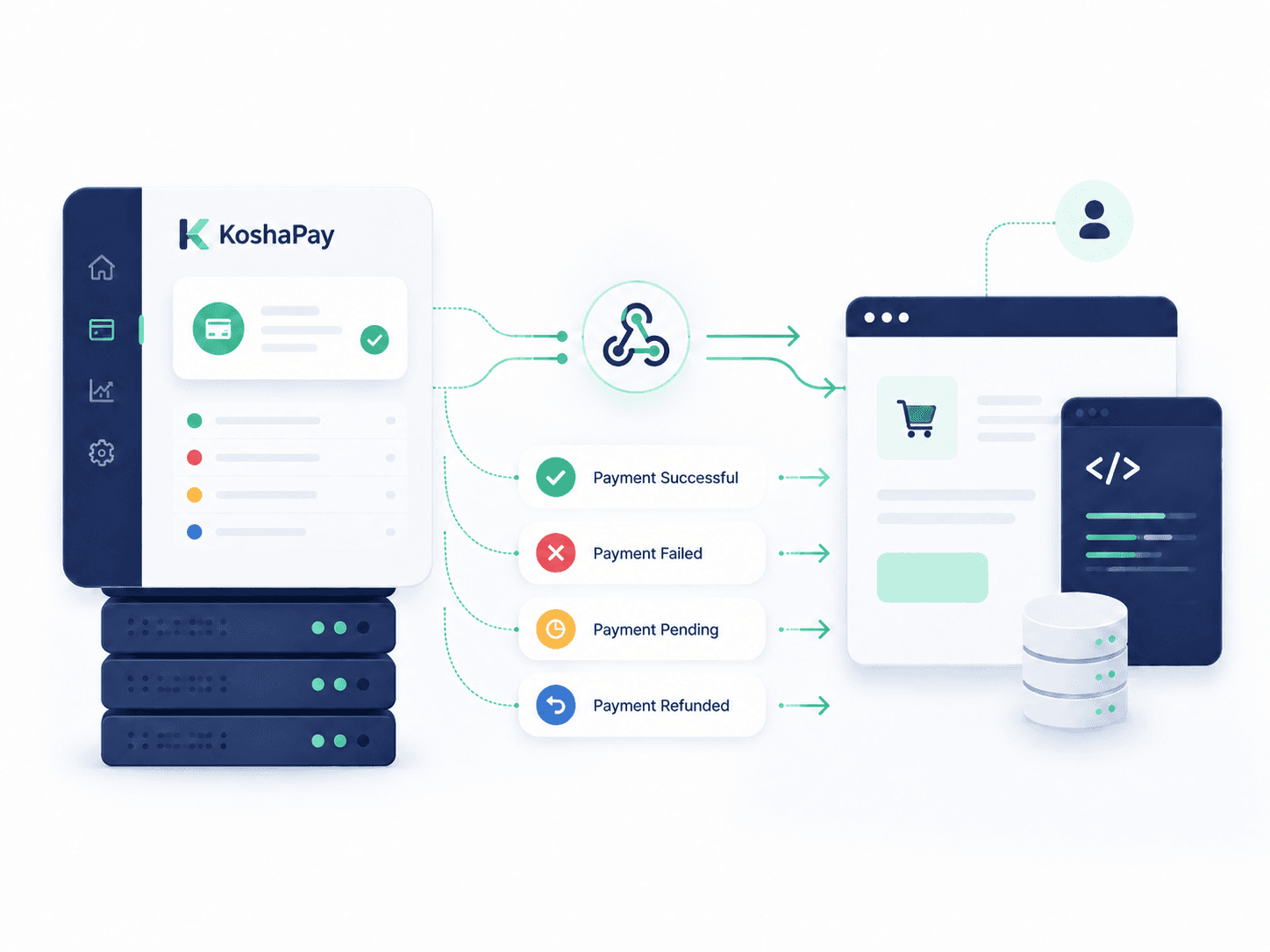
A webhook is an automatic message sent from a payment platform to your server when an event happens. In payments, this event could be a successful payin, failed payout, refund update, settlement update, or status change.
For example, when a customer completes a payment, KoshaPay can send a webhook callback to your system so your order, booking, policy, or invoice status can be updated automatically.
Why Webhooks Matter
- Real-time updates: Your system receives transaction updates without manual checking.
- Better customer experience: Orders, bookings, or services can be activated faster after payment confirmation.
- Less manual work: Support and operations teams do not need to repeatedly check payment status.
- Clear reconciliation: Finance teams can match payment updates with internal records more easily.
- Reliable automation: Your backend can trigger actions based on successful, failed, or refunded payments.
Common Payment Events Sent Through Webhooks
- Payin successful
- Payin failed
- Payin pending
- Payout successful
- Payout failed
- Refund initiated
- Refund successful
- Settlement update
Example Webhook Flow
- A customer makes a payment on your website or app.
- KoshaPay processes the transaction.
- The payment status changes to successful, failed, or pending.
- KoshaPay sends a webhook callback to your configured webhook URL.
- Your backend verifies the callback and updates the order or transaction record.
- Your customer or internal team sees the updated status automatically.
Best Practices for Webhooks
- Use a secure HTTPS URL: Always configure webhook URLs over HTTPS.
- Verify webhook authenticity: Validate the signature or hash before trusting the payload.
- Make webhook handling idempotent: If the same webhook is received twice, your system should not create duplicate updates.
- Store webhook payloads: Keep webhook request data for debugging and audit purposes.
- Respond quickly: Your webhook endpoint should return a success response after receiving the callback.
- Retry failed processing: If internal processing fails, use a retry mechanism or queue.
How KoshaPay Helps
KoshaPay helps merchants keep their systems updated with webhook callbacks for payment and payout events. This allows your backend to automatically update transaction status, order status, refund records, and payout visibility.
- Payin updates: Receive payment success, failure, and pending status callbacks.
- Payout updates: Track payout movement and payout status changes.
- Refund updates: Keep refund status visible for support and finance teams.
- Transaction visibility: Maintain cleaner records for reconciliation and reporting.
Final Thoughts
Webhook callbacks make payment systems more reliable, automated, and transparent. They reduce manual status checks, improve customer experience, and help teams maintain accurate transaction records.
For any business accepting online payments, webhooks are not optional. They are a key part of building a professional and scalable payment operation.